
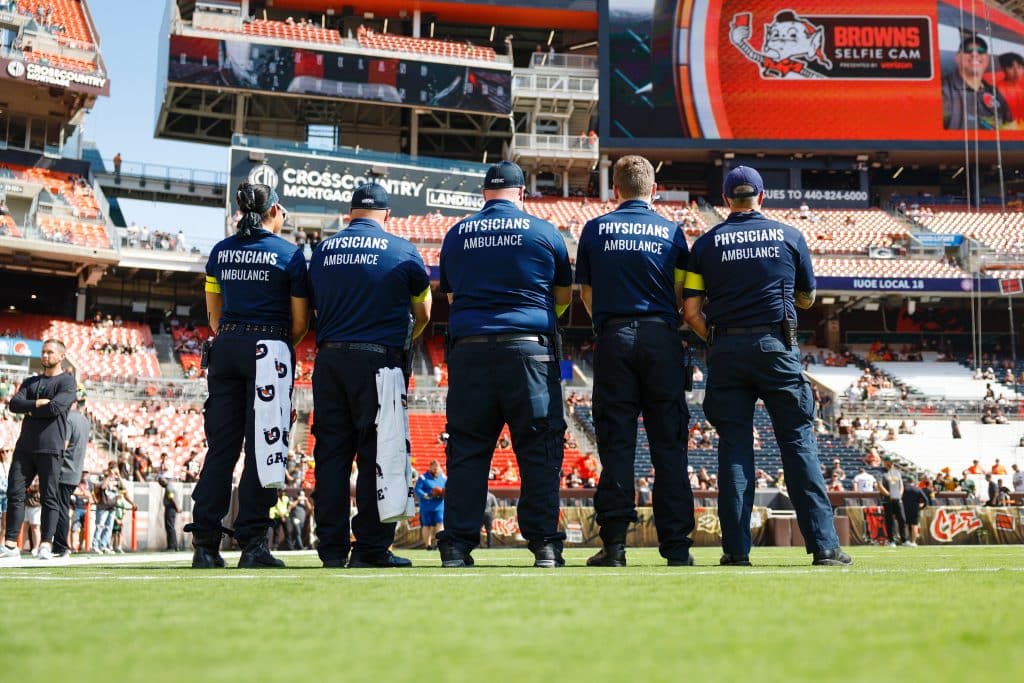
An Advanced EMT (AEMT) plays a critical role in modern emergency medical services, bridging the gap between foundational EMT care and paramedic-level interventions. Whether responding to a medical emergency, supporting a patient during interfacility transport, or providing care at a community event, the Advanced EMT brings expanded clinical skills that can improve patient outcomes before a patient ever reaches the hospital.
At Physicians Ambulance, we believe every patient is a name, not a number. That belief drives our commitment to education, professional development, and delivering high-quality pre-hospital care throughout Ohio. Understanding what an Advanced EMT does, and why the role matters, helps patients, families, and aspiring EMS professionals better appreciate the impact these clinicians make every day.
The Advanced EMT, often called an AEMT, serves as a vital clinical bridge between EMTs and paramedics, providing advanced interventions that can make a meaningful difference in patient outcomes.
Understanding the Advanced EMT Role
So, what is an Advanced EMT in plain terms? An AEMT is a licensed pre-hospital clinician who has completed education and training beyond the EMT level and is authorized to perform a broader range of medical interventions. They still operate within a defined scope of practice, but that scope is expanded in ways that can materially affect patient outcomes.
Think of the AEMT as the provider who can do more when more is needed. A standard EMT is highly skilled in patient assessment, CPR, oxygen administration, splinting, bleeding control, and other foundational emergency care. Those skills are indispensable. But when a patient needs vascular access, certain medications, more advanced airway support, or closer clinical management during transport, the AEMT steps into a wider lane.
This is why the AEMT role is so important in modern EMS. Emergency care is not just about getting someone from point A to point B. Increasingly, ambulance professionals function like mobile clinical teams, stabilizing patients before they ever reach the hospital. In that environment, the AEMT is not a “middle” provider in the sense of being less important. They are often the difference between basic support and meaningful advanced intervention in the field.
That role is especially valuable in healthcare systems serving broad geographic areas, complex transport demands, and diverse patient populations. In Ohio communities where Physicians Ambulance operates, from Brecksville and North Ridgeville to Mentor, Kent, Warren, Smithville, and Grove City, having advanced clinicians available helps ensure patients receive the right level of care at the right moment.
How an Advanced EMT Differs From an EMT
The clearest difference between an EMT and an Advanced EMT comes down to scope of practice. Both are trained emergency medical professionals who provide essential pre-hospital care. Both respond to patients in urgent and non-urgent settings. Both must stay calm, communicate clearly, and perform under pressure. However, an Advanced EMT has additional education and clinical training that allows for more advanced assessment, interventions, and treatment.
A standard EMT provides critical foundational care. That includes airway positioning, oxygen therapy, CPR, AED use, patient movement, trauma care, and basic monitoring. These are not “entry-level” in the dismissive sense. They are the bedrock of emergency medicine and often make a significant difference in patient outcomes. But there are moments when those interventions alone are not enough.
An AEMT can often initiate IV therapy, administer select life-saving medications, and use more advanced airway tools depending on state protocols and medical direction. That means the AEMT can respond more effectively to dehydration, hypoglycemia, respiratory distress, allergic reactions, and other clinical situations where time matters and the patient needs more than supportive basic care. By beginning treatment earlier in the patient journey, Advanced EMTs help bridge the gap between foundational emergency care and paramedic-level intervention.
A simple way to picture it is this: an EMT is equipped to stabilize and support. An AEMT is equipped to stabilize, support, and begin additional medical treatment that can change the patient’s trajectory before arrival. In the field, that can feel less like a technical distinction and more like a door opening at exactly the right time. For patients, that often means receiving the right level of care sooner. For EMS professionals, it represents an important step in clinical growth and professional development.
The AEMT Scope of Practice: What Can an Advanced EMT Do?
The phrase scope of practice gets used a lot in EMS, and for good reason. It defines what a provider is educated, authorized, and clinically prepared to do. For an Advanced EMT, that scope is significantly broader than that of an EMT, while still remaining distinct from the full paramedic scope. By providing additional treatment capabilities before a patient reaches the hospital, Advanced EMTs play an important role in modern emergency medical services.
Although exact capabilities can vary by state regulations, local protocols, and medical oversight, AEMTs commonly perform interventions such as starting intravenous lines, administering approved medications, and using advanced airway adjuncts. These skills are not just extra boxes checked on a competency list. They are practical tools that can buy time, reduce deterioration, and improve patient comfort and stability during transport. This expanded scope allows Advanced EMTs to provide additional interventions that can improve patient care before arrival at a hospital or other healthcare facility.
For example, if a patient is severely dehydrated, an AEMT may be able to establish IV access and begin fluid therapy. If a diabetic patient is altered and hypoglycemic, an AEMT may be able to administer dextrose or other approved treatments promptly. If a patient is in respiratory distress, the AEMT can often do more than simply provide oxygen, they may use advanced airway support measures and medications allowed under protocol. In many situations, early intervention by an Advanced EMT can help create a smoother transition to the next level of care. These interventions help ensure patients receive timely care during some of the most critical moments of their medical journey.
This expanded role becomes especially meaningful in high-pressure situations. Picture a patient in a long-term care facility whose condition changes rapidly during transfer. Or a post-surgical patient who begins showing signs of instability while en route between facilities. Or an event medicine scenario where a participant collapses and needs more than basic first aid. In those moments, the AEMT is not just riding in the ambulance. They are actively extending the reach of clinical care beyond the walls of the hospital. At Physicians Ambulance, that ability to bring advanced care directly to the patient reflects our commitment to education, clinical excellence, and finding purpose in every patient interaction.
Key Skills and Interventions an AEMT May Perform
One of the most important reasons EMTs pursue AEMT certification is the ability to provide a wider range of interventions. These skills can make the difference between watching a problem unfold and being equipped to address it. For patients, that often means receiving earlier treatment and a higher level of clinical support during transport and emergency response.
Among the most recognized AEMT skills is IV therapy. Establishing vascular access is a major step forward in pre-hospital capability. It allows the provider to administer fluids and approved medications, and it supports better management of patients whose conditions may worsen during transport. In practical terms, this means an AEMT can do more for a patient who is weak, hypotensive, dehydrated, or in metabolic distress. This ability to begin treatment before hospital arrival is one of the reasons Advanced EMTs play such an important role in modern EMS systems.
Another major area is medication administration. Depending on protocol, AEMTs may be able to administer medications for conditions like low blood sugar, severe allergic reactions, respiratory emergencies, and pain or nausea in certain systems. Medication access matters because emergencies are often measured in minutes, not abstractions. The sooner appropriate treatment begins, the better the odds that a patient arrives in a more stable condition. At Physicians Ambulance, this combination of technical skill, clinical judgment, and continuous learning reflects our commitment to providing high-quality pre-hospital care while helping team members grow professionally throughout their EMS careers.
AEMTs may also perform forms of advanced airway management beyond what an EMT is typically authorized to do. Airway emergencies are unforgiving. A patient can compensate for only so long before they cannot. Having a clinician on scene or in transport who can recognize deterioration early and intervene with enhanced airway tools can be critically important. The additional skills and clinical judgment gained through Advanced EMT training allow providers to deliver a higher level of care during critical moments when every intervention matters.
Beyond technical procedures, AEMTs also develop stronger clinical decision-making. That may sound less dramatic than an IV catheter or medication vial, but it is just as important. The ability to assess trends, recognize red flags, communicate with receiving facilities, and think one step ahead is part of what turns advanced training into better patient care. For patients and families, those differences can translate into safer transports, greater comfort, and improved continuity of care.
Why the AEMT Matters in Patient Outcomes
It is easy to treat credentials like ladder rungs, EMT, then AEMT, then paramedic, without stopping to consider what each level actually changes for the patient. But the AEMT role is not just a resume upgrade. It has real impact on patient outcomes.
When a patient receives earlier intervention, they often arrive at the next level of care in better shape. That can mean a more stable blood pressure, improved airway status, corrected hypoglycemia, reduced distress, or faster recognition of a serious problem. In emergency medicine, small improvements upstream can create major differences downstream.
This matters in both emergency response and skilled patient transport. Not every high-risk patient is in a flashing-lights, sirens-on situation. Some are medically fragile, recently discharged, or moving between levels of care with a condition that can change quickly. These are the patients who benefit from clinicians capable of more than observation. They benefit from providers who can intervene. Having Advanced EMTs available helps ensure patients receive the right level of care at the right time, regardless of where they are in the healthcare journey.
At Physicians Ambulance, where service lines include ALS, specialty care transport, event medicine, and partnerships across a broad healthcare network, the value of advanced field clinicians is obvious. The company’s emphasis on clinical education and patient-centered care aligns naturally with the AEMT role. Better-trained providers do not just look stronger on paper. They help build a stronger system for patients, families, facilities, and community partners.
Advanced EMT Training: What the Path Looks Like
For EMTs considering the next step, one of the biggest questions is straightforward: what does Advanced EMT training actually involve? The answer is part classroom, part hands-on skill development, part clinical maturity, and part proving to yourself that you are ready to carry more responsibility. It is also an opportunity to develop the knowledge, confidence, and decision-making skills needed to provide a higher level of patient care.
A strong AEMT program goes beyond memorizing protocols. It teaches the “why” behind interventions, the anatomy and physiology behind emergencies, the pharmacology behind medications, and the situational judgment needed when things get messy. Because they do get messy. Patients do not present like textbook bullet points. They present like noise, uncertainty, family panic, incomplete histories, and subtle changes that only matter if you know what you are looking at. That ability to think critically and adapt to changing situations is what helps transform technical skills into meaningful patient care.
Through the Physicians Ambulance Training Institute, EMTs can pursue that transition in an environment built around professional development and clinical growth. This is not education for the sake of checking a compliance box. It is education designed to produce more capable, more confident providers who can contribute meaningfully in the field. At Physicians Ambulance, we believe education, experience, and continuous improvement lead to better clinicians and better patient outcomes. That philosophy is reflected throughout the training experience.
The training journey typically blends advanced didactic instruction with practical application. Students learn expanded patient assessment, pharmacology fundamentals, IV access, airway techniques, medical and trauma management, and scenario-based problem solving. Then those concepts are tested where they should be tested: in realistic settings, with hands-on practice, repetition, feedback, and field exposure. The goal is not simply to pass an exam. It is to prepare providers to deliver safe, compassionate, and effective care when patients need them most.
Classroom Learning Meets Field Reality
There is a big difference between understanding a skill in theory and performing it when a patient is pale, short of breath, and deteriorating in front of you. Good AEMT training respects that difference. It does not pretend competence appears because a lecture slide said so.
That is why the best programs combine structured classroom content with hands-on field experience. In the classroom, students build the framework: anatomy, physiology, medication indications, contraindications, treatment pathways, and patient assessment strategies. In practical labs and field settings, that framework gets pressure-tested.
At Physicians Ambulance, the broader company culture strongly supports this kind of real-world development. The organization’s investment in clinical education, certified EMS instructors, and ongoing training reflects a belief that providers should never stop sharpening their edge. That matters for new AEMTs, because confidence is not built by being told you are ready. It is built by doing the work, learning from experienced clinicians, and developing judgment through repetition.
For EMTs who want a career that keeps moving, this kind of training is a turning point. It takes you from performing essential foundational care to delivering a more advanced level of treatment. It also changes how you see the patient encounter. You begin to think less like a transporter and more like a clinician managing a dynamic situation. For many EMS professionals, Advanced EMT certification serves as an important stepping stone toward long-term career development and expanded clinical expertise.
Why EMTs Choose to Become AEMTs
There are practical reasons to pursue AEMT certification, and there are personal ones. Usually, the decision involves both.
On the practical side, becoming an Advanced EMT can expand career opportunities, increase clinical responsibility, and create a faster path toward leadership or future paramedic education. It signals that you are serious about growth. It shows that you are willing to take on more, learn more, and be trusted with a higher level of patient care.
But for many providers, the deeper reason is simpler: they want to be more useful. They want more tools when the patient in front of them needs help. They want to do more than watch a problem unfold while waiting for a higher-level resource. They want to contribute at a different level.
That desire matters. In EMS, ambition without service can get hollow fast. The best advanced providers are not chasing patches or titles for their own sake. They are chasing competence. They want to walk into difficult moments with steadier hands and a fuller skill set. They want to be the kind of teammate other clinicians trust. They also understand that continued learning and professional growth are ultimately about serving patients more effectively when those patients need them most.
At a company like Physicians Ambulance, where the mission is centered on helping and caring for those who cannot for themselves, that mindset fits. The AEMT pathway is not just a credentialing exercise. It is a way to become more clinically effective in service of the patient. It reflects a commitment to education, teamwork, and continuous improvement, qualities that help strengthen patient care, support fellow clinicians, and positively impact the communities we serve.
Career Growth at Physicians Ambulance
For EMTs in Ohio looking for a place to build a long-term EMS career, the environment matters as much as the certification. You can have talent and motivation, but if the organization around you does not invest in people, growth stalls. That is one reason Physicians Ambulance stands out. For providers pursuing Advanced EMT certification, having access to education, mentorship, and real-world clinical experience can be just as important as the certification itself.
As a third-generation, family-owned EMS provider serving more than 250 healthcare and professional partners across 20 counties in Northern and Central Ohio, Physicians Ambulance has built its reputation around clinical standards, service excellence, and education. Those are not decorative words. They shape the employee experience. The organization’s commitment to continuous learning and professional development reflects a belief that stronger clinicians help create better outcomes for patients and healthcare partners alike.
The company’s emphasis on treating employees like family, supporting continuing education, and providing access to instructors and specialized training creates a strong foundation for EMTs ready to advance. For someone moving into the AEMT role, that support can make the difference between merely passing a course and truly developing as a clinician. At Physicians Ambulance, education is viewed as more than a requirement. It is an investment in the people who provide care every day and in the communities they serve.
There is also the bigger picture. Physicians Ambulance operates across multiple service levels, including BLS, ALS, specialty care transport, and critical care partnerships. That kind of system gives advancing providers room to grow. It creates a professional ladder with real rungs, not vague promises. If you are an EMT who wants to build a stronger career while improving patient care, AEMT training can be one of the most strategic next moves you make.
AEMT as the Clinical Bridge That Matters
The Advanced EMT is more than a certification level. It is a clinician equipped with additional knowledge, skills, and judgment to deliver higher levels of pre-hospital care when patients need it most. By expanding treatment capabilities between the EMT and paramedic levels, Advanced EMTs help improve patient outcomes, strengthen healthcare partnerships, and support communities across Ohio. It is the point where foundational emergency care expands into broader treatment capability. It is where a provider gains the tools to start IVs, administer approved medications, manage more complex patient presentations, and make a larger impact during transport and response.
That is why the answer to “what is an Advanced EMT?” should never be reduced to a dry certification definition. An AEMT is a clinician who helps close the gap between basic care and paramedic-level intervention. In the field, that gap can be the difference between delay and action, between support and treatment, between hoping the patient holds on and actively helping them stabilize.
For EMTs ready to take the next step, Advanced EMT training offers more than expanded scope. It offers momentum. It deepens clinical knowledge, strengthens confidence under pressure, and opens doors inside organizations that value excellence. At Physicians Ambulance, we believe that education, experience, and a commitment to serving others create better clinicians and better patient experiences. For EMTs seeking meaningful career growth, becoming an Advanced EMT is an opportunity to develop professionally while making a greater impact on every patient encounter.
If you are ready to grow from EMT to AEMT and want to train in an environment that believes in building better clinicians, not just filling shifts, Physicians Ambulance offers a place to learn, advance, and make that next level of care count.