
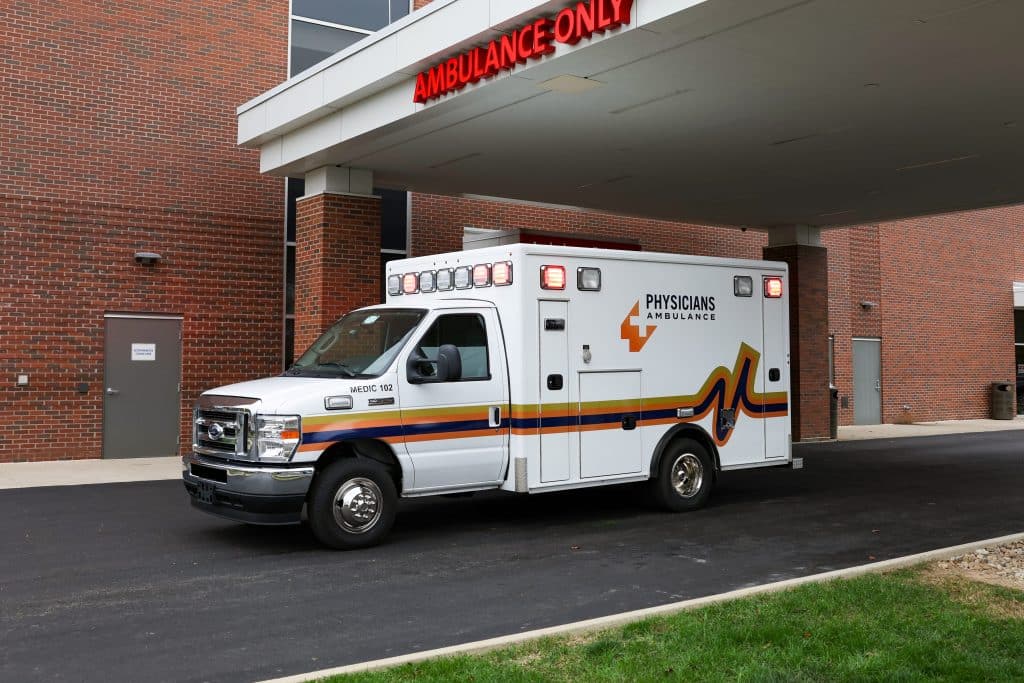
Disclaimer: This article provides general educational information about emergency transport expenses in Ohio based on the latest research, news, and official guidance. Costs may change and depend on location, provider, and insurance. For legal, financial, or medical advice about your situation, contact your insurance, healthcare provider, or legal advisor.
A medical emergency often arrives without warning. When you call 911 in Ohio, your priority is getting lifesaving care, but many residents face high ambulance bills after the emergency ends. Knowing current ambulance costs and new rules keeps you prepared.
2025 Ohio Ambulance Charges: The Latest Data
Ambulance Prices have risen in recent years. In 2025, average charges reported statewide include:
- Basic Life Support (BLS): Ranges from $900 as a new base rate in some Ohio cities (e.g., Waterville) up to $1,200 and above for some private services.
- Advanced Life Support (ALS): Often $1,277 base or higher, sometimes split by ALS I and II for different complexities.
- Mileage Fees: Have increased, for example, Waterville in 2025 moved from $10 to $25 per mile.
- Typical Total Bill: Usually $1,200-$3,500+ (before insurance or discounts), depending on care, level, distance, and provider.
Recent local government actions in 2025 show a trend toward increased base rates and higher per-mile fees to help offset providers’ rising costs and staffing, with additional rules requiring EMS services in every community for improved safety and response.
With and Without Insurance: What Will You Owe?
- Uninsured? Expect to pay the total bill, which can run $1,200-$3,500+, though financial aid or payment plans are usually available.
- With Insurance: Out-of-pocket costs average $250-$1,500 depending on your deductible, co-pay, plan network, and whether your insurance is state-regulated or self-insured.
- Medicare/ Medicaid: Ohio Medicaid covers most emergency transports for eligible residents with little out-of-pocket expense; Medicare pays per the Federal Fee Schedule, with a 20% coinsurance after deductible.
Ohio law as of 2025 continues to prevent “surprise billing” for many insured patients when ambulances are out-of-network, thanks to HB 388 – but not all insurance is covered, and federal law does not protect ground ambulance bills in all situations. Patients insured by self-funded employer plans may still receive unexpected bills.
If you’re uninsured, you’ll likely pay the full billed charge, generally between $1,200 and $3,000 or more, depending on the distance and level of care. However, you can often negotiate, request financial aid, or apply for charity care to lower your bill.
Your total cost depends on:
- Type of care (Basic or Advanced Life Support)
- Travel distance
- Type of provider (public or private)
- Insurance or lack thereof
The Two Main Service Levels
1. Basic Life Support (BLS)
Emergency Medical Technicians (EMTs) provide non-invasive care, including:
- Bandaging and wound management
- Oxygen therapy
- Vital sign monitoring
- Basic airway support
FAIR Health’s analysis shows average charge amounts for emergency ground ambulance transport (2020 data): BLS charges around $940, though “charge” is not the same as what insurers or patients pay after negotiated or allowed amounts are applied.
2. Advanced Life Support (ALS)
Paramedics deliver complex interventions such as:
- IV medications
- Heart rhythm monitoring
- Advanced airway procedures
- Defibrillation
ALS charges averaged $1,277 (2020), with allowed amounts (what insurers actually pay) substantially lower at $758.
Specialty Care Transports handle critical interfacility transfers requiring equipment such as ventilators, multiple medication drips, advanced airway management, electrical interventions for cardiac dysrhythmias, and other time-sensitive critical interventions. These transports vary widely in price based on equipment needs and staff qualifications.
How Much Does Distance Add to Your Bill?
Mileage charges typically apply only for loaded miles (the distance during which you’re in the vehicle), but exact billing practice can differ by provider and payer. Medicare uses a standardized ground-ambulance mileage payment (CPT A0425) that varies by ZIP code; commercial billed per-mile rates are often higher and differ across municipal and private providers.
Check the provider’s fee schedule or local ordinance for exact local mileage charges rather than assuming a single statewide rate. Ranges based on national studies show per-mile charges typically fall between $10 and $30, though local experience may differ.
Example (local ordinance only): Tiffin, OH, lists municipal ambulance charges:
- BLS base $750
- ALS I $1,000
- ALS II $1,500
- Per-mile $14.29
Using those figures, a 10-mile ALS I transport from Tiffin would be roughly $1,000 + (10 × $14.29) = $1,142.90 before insurance. These are local charges and can differ substantially from other Ohio jurisdictions.
Private companies set their own rates. News reports show that individual bills can be very large but sometimes are reduced through negotiation, charity care, or insurer review; examples are illustrative and not representative of typical cases.
How Much Does an Ambulance Cost in Ohio With Insurance?
For most insured Ohio residents, ambulance costs are partially covered, but depending on your plan, you may still owe a portion. On average, patients with insurance pay a few hundred dollars after their plan’s deductible, copay, or coinsurance. The exact amount varies based on coverage type and network rules.
Three main insurance types cover emergency transport differently:
1. Medicare Coverage (For Seniors 65+ and Some Disabled Individuals)
Medicare Part B covers medically necessary ambulance transports to the nearest appropriate facility.
For 2025, you pay the $257 deductible, then 20% of the Medicare-approved amount (not the billed charge). Medicare Advantage plans must cover at least these benefits, but may have different copays or rules.
2. Medicaid Coverage (For Low-Income Ohioans)
Ohio Medicaid covers all emergency transports by licensed providers and most non-emergency rides when medically necessary. Most recipients pay little or nothing out-of-pocket.
3. Private Insurance Coverage (Through Employers or Individual Purchase)
Your plan’s deductible, copay, and coinsurance determine what you pay.
Typical ranges:
- Deductible: $500–$3,000
- Copay: $100–$350 per emergency ride
- Coinsurance: ~20% after deductible
Ohio’s 2022 House Bill 388 now limits surprise balance billing for many insured residents when an out-of-network ambulance responds.
Auto Insurance May Help After Accidents
If you’re injured in a vehicle crash, your auto insurance may cover emergency transport under Personal Injury Protection (PIP) or Medical Payments coverage, often before your health insurance applies.
Ohio’s Protection Against Surprise Ambulance Bills
Until recently, Ohio residents often faced unexpected charges after emergency transport, especially when an out-of-network ambulance responded without their choice.
Ohio’s House Bill 388, effective since 2022, limits these surprise bills for many insured patients by requiring insurers and ambulance providers to resolve payment directly. This protection generally applies to state-regulated, fully insured health plans.
However, not all plans are covered. Some employers have self-insured plans, and uninsured patients may still face out-of-network costs. Federal law also provides separate protection for air ambulance services.
If you receive a bill you don’t understand, contact your insurance provider or the Ohio Department of Insurance (1-800-686-1526) for help reviewing it.
How Can You Reduce Your Financial Burden?
Several programs can help manage expenses.
Annual Membership Programs
Some counties or private ambulance services offer annual membership or subscription programs that reduce or eliminate patient cost-sharing for transports. Prices and benefits vary widely by provider, so contact your local EMS or township to learn whether a membership program exists and what it covers.
Payment Plans Make Bills Manageable
Most ambulance providers in Ohio offer interest-free payment plans, typically spread over 6–12 months. Instead of a large lump-sum bill, you can make smaller monthly payments as long as you stay current. Ask the billing department what monthly amount fits your budget; most services will work with you.
Financial Assistance Programs
If you’re struggling to pay, don’t ignore the bill. Contact the provider’s billing office immediately to request charity care, hardship discounts, or extended payment arrangements. Many services offer income-based assistance that can reduce or eliminate your balance.
- Hospital-based programs often tie to facility-wide assistance
- Non-profit services may offer sliding-scale fees
- Private companies increasingly provide hardship programs
State and Local Resources
County emergency assistance funds sometimes help with unexpected bills. Community organizations may provide financial aid. Medicaid eligibility could eliminate your expenses entirely; applications take 30-45 days, so apply promptly if you qualify.
When Should You Call 911 Without Hesitation?
Cost concerns should never delay emergency care. Certain situations demand immediate professional transport.
Life-Threatening Emergencies
Call immediately for:
- Chest pain, pressure, or discomfort radiating to arms/jaw/back
- Face drooping, arm weakness, or speech difficulty (stroke)
- Severe breathing problems or turning blue
- Uncontrolled bleeding despite direct pressure
- Loss of consciousness or extreme confusion
- Serious trauma from falls, accidents, or violence
- Suspected overdose with altered consciousness
- Severe allergic reactions with breathing difficulty or swelling
- Seizures (especially lasting over 5 minutes or in someone without epilepsy)
- Shock symptoms (pale, clammy, rapid, weak pulse)
Paramedics provide lifesaving interventions en route that aren’t possible in personal vehicles: medications, airway management, cardiac monitoring, and defibrillation. Minutes often determine outcomes.
Other Situations Requiring Professional Transport
Beyond obvious emergencies, ambulance services may be necessary when:
- Someone can’t sit upright safely
- Conditions are unstable, requiring continuous monitoring
- Moving could worsen spine, head, or internal injuries
- Oxygen, medications, or cardiac monitoring are needed during transport
- The person requires interventions that only trained professionals can do
Unsure whether to call? Dial 911 anyway. Dispatchers assess situations and guide you while help is dispatched.
What Are the Alternatives for Non-Emergencies?
For scheduled appointments or non-urgent situations, other options cost significantly less.
Non-Emergency Medical Transport (NEMT)
These wheelchair vans and stretcher vehicles serve patients who cannot use regular transportation but do not need emergency care.
Requirements:
- 48+ hour advance booking
- Doctor’s order confirming the necessity
- Often covered by Medicaid or Medicare Advantage
Contact your insurer about NEMT benefits.
When Can Personal Transportation Work?
Friends or family can safely drive you for:
- Minor injuries not worsening
- Stable conditions requiring non-urgent evaluation
- Situations where you can sit comfortably
What Are the Risks of the Wrong Choice?
Never use personal vehicles for actual emergencies:
- You can’t provide advanced care in transit
When genuinely unsure, always err toward calling 911.
Experience the Physicians Ambulance Difference
For over 60 years, Physicians Ambulance Service has provided compassionate emergency care to Ohio families. As a family-owned company serving 20+ counties, we’re not just another ambulance service; we’re your neighbors, treating every patient how we’d want our loved ones treated.
Our highly trained paramedics and EMTs deliver emergency transport, specialized interfacility care, and critical patient services with clinical excellence backed by genuine compassion. We work directly with insurance providers to handle billing complexities, process claims efficiently, and help families understand their financial responsibilities. When you need assistance, our patient accounting team explores payment options and financial aid to ease your burden during difficult times.
Questions about coverage or need emergency services? Call 888-519-1130 24/7 today!