
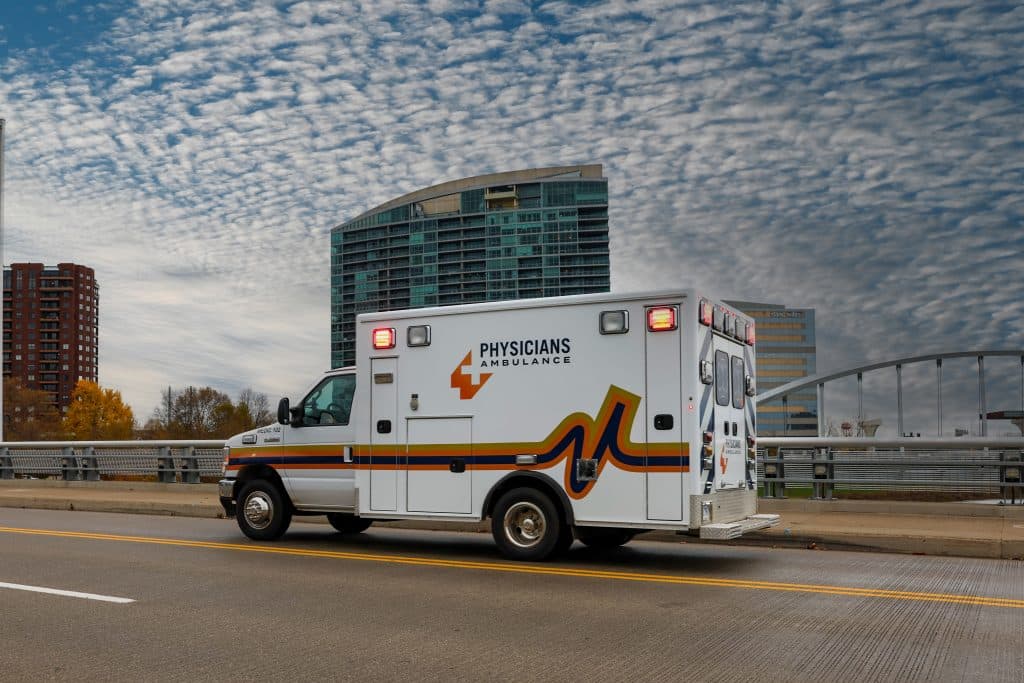
Medical situations can turn serious fast. Whether it’s happening to you, a family member, or a stranger on the street, knowing when to call an ambulance versus when other options work better can save someone’s life.
This guide walks you through recognizing true emergencies, understanding what paramedics and EMTs actually do, and making smart decisions when every second counts. You’ll learn which symptoms mean “call 911 now” and when it’s driving yourself or visiting urgent care is okay.
Table of Contents
What Happens When You Call for an Ambulance?
When you call 911, paramedics and EMTs deliver on-scene care and rapid transport to the right hospital.
- Paramedics can start IVs, administer medications, and manage airways.
- EMTs provide essential life support such as CPR, oxygen, and bleeding control.
For critical conditions like heart attacks or strokes, they alert hospitals ahead of time so doctors are ready when you arrive, a coordination that can save precious minutes and lives.
Ambulance vs. EMS: What’s the Difference?
People often use “ambulance” and “EMS” to mean the same thing, but they actually refer to different parts of the emergency care system.
EMS (Emergency Medical Services)
EMS is the entire system that responds to medical emergencies outside the hospital. It includes:
- 911 dispatchers who take emergency calls and send help
- Emergency Medical Responders (EMRs), EMTs, and Paramedics who assess and treat patients
- Ambulances, helicopters, and other vehicles used for transport
- Medical directors and hospitals that oversee training, quality, and patient handoff
In short, EMS is the network of people, protocols, and equipment that make emergency medical care possible before you reach the hospital.
Ambulance
EMS crews use an ambulance to transport patients to the hospital and provide medical care at the scene.
It’s equipped with:
- Emergency lights and sirens for rapid response
- Medical gear like oxygen, stretchers, monitors, and defibrillators
- Staffed by EMTs or paramedics who provide prehospital care en route
So, while an ambulance is one component, EMS is the broader system that includes dispatch, responders, vehicles, and coordination with hospitals.
When to Call EMS: Life-Threatening Emergencies
Some situations are clear-cut emergencies. The American College of Emergency Physicians has specific guidelines about when you need an ambulance immediately.
Let’s go through the big ones.
1. Heart Attack
Heart attacks happen when something blocks blood flow to your heart. For certain types of heart attacks called STEMI, hospitals aim to open the blocked artery within 90 minutes of your arrival. That’s why calling 911 (rather than driving) is so important. EMS can start care immediately and get you to the right hospital, reducing treatment delays.
Here’s what to watch for:
- Chest discomfort that feels like pressure, squeezing, fullness, or pain in the center or left side of your chest. It might last a few minutes or come and go. Some people describe it as feeling like an elephant sitting on their chest
- Pain that spreads to your arms (especially the left one), back, neck, jaw, or stomach
- Shortness of breath, whether or not you have chest pain
- Cold sweats, nausea, lightheadedness, or a weird feeling that something’s really wrong
Important: Women often experience heart attacks differently from men. They might not have obvious chest pain but instead feel unusually tired, short of breath, nauseous, or have pain in their back or jaw.
2. Stroke
Strokes happen when blood flow to a part of the brain is cut off. The most effective stroke treatments are extremely time-sensitive: IV clot-busting medicine works best when given within 4.5 hours for selected patients, and mechanical clot removal can help some people up to 24 hours after symptoms start when advanced imaging shows salvageable brain tissue. Eligibility depends on timing, evaluation, and imaging, so call 911 immediately and report when symptoms start.
There’s a simple test called F.A.S.T. that anyone can remember:
- F – Face: Ask the person to smile. Does one side of their face droop?
- A – Arms: Ask them to raise both arms. Does one arm drift downward?
- S – Speech: Ask them to repeat a simple sentence. Is their speech slurred or weird?
- T – Time: If you see any of these signs, even if they go away, call 911 right now. Also, note what time the symptoms started; doctors need this information
Other stroke symptoms include sudden confusion, trouble seeing in one or both eyes, trouble walking, dizziness, loss of balance, or a really bad headache for no reason.
Never drive yourself or have someone else drive you if you think you’re having a stroke. Ambulances alert specialized stroke centers ahead of time. In a few specialized programs called Mobile Stroke Units, crews can start treatment in the field, but these aren’t common yet. In most EMS systems, the big benefits are rapid assessment, early triage, and giving hospitals advance notice so they’re ready when you arrive.
3. Serious Bleeding
Uncontrolled bleeding can turn deadly fast. Your body can only lose so much blood before going into shock. Call an ambulance if:
- Blood is spurting or pulsing from a wound (suggests an artery is cut); this can be fatal within minutes
- The bleeding won’t stop after about 10 minutes of firm, direct pressure
- The person shows signs of shock: pale or bluish skin, a cold body, fast breathing, confusion, weakness, or passing out
- It’s a serious accident, like a car crash or a bad fall, where moving the person could make things worse
- You think there’s internal bleeding: coughing or vomiting blood, blood in urine or stool, or severe belly pain after an injury
- There’s a crush injury, amputation, or the blood flow to an arm or leg seems cut off
For severe arm or leg bleeding, a properly applied tourniquet can save lives; follow dispatcher instructions. EMTs and paramedics know how to move injured people safely without causing more damage.
4. Breathing Problems
Not being able to breathe is terrifying, and breathing problems can go downhill really quickly. Ambulances carry oxygen, breathing equipment, and medications that can reverse life-threatening breathing issues. Call for help if someone is:
- Gasping for air, can’t speak full sentences, or feels like they’re suffocating
- Choking and can’t clear their airway with the Heimlich maneuver or back blows. If they can’t speak, cough, or breathe, they need help immediately
- Having a severe allergic reaction: throat swelling, trouble breathing, face swelling, or hives spreading over their body. This can happen from foods, medications, or insect stings
- Having an asthma attack that’s not getting better with their inhaler, their lips or fingernails look blue, or they can barely talk
If someone’s choking, try the Heimlich maneuver while someone else calls 911. For severe allergic reactions, use an EpiPen if they have one, then call for help even if they seem better; symptoms can come back.
5. Unconsciousness or Confusion
Changes in consciousness or mental state can mean something serious is happening with the brain, heart, or body overall. These changes might signal a stroke, heart problem, infection, drug overdose, or other critical issues:
- The person is unconscious, and you can’t wake them up. Check if they’re breathing and have a pulse
- They suddenly collapse, especially if they have heart problems or are older
- They’re suddenly very confused, can’t recognize people or where they are, or are acting totally out of character
- They’re having a seizure for the first time, it lasts more than five minutes, they have multiple seizures, or it happened after a head injury
6. Other Situations That Need an Ambulance
Several other conditions need immediate ambulance response:
- Their heart has stopped, and they need CPR. Call 911 before you start CPR
- Suspected poisoning or drug overdose
- Severe burns, especially on the face, hands, feet, or genitals, or burns from chemicals or electricity
- Bad head injury or possible spinal injury. Moving them wrong could cause paralysis
- A broken bone poking through the skin (high risk of infection and serious bleeding)
- Pregnancy complications like heavy bleeding, severe pain, or emergency delivery
Now that you know when you need an ambulance, let’s talk about when you don’t.
When an Ambulance Isn’t Necessary
Understanding when you don’t need an ambulance is just as important. Using emergency services for non-emergencies can delay help for people in real crises. Plus, there are usually better (and cheaper) options for non-urgent situations.
What Situations Don’t Need 911?
Skip calling an ambulance for:
- Getting to doctor appointments, routine procedures, or picking up prescriptions. Use Uber, Lyft, a friend, or non-emergency medical transport instead
- Minor cuts, scrapes, bruises, or sprains you can handle with basic first aid
- Common stuff like colds, flu, sore throats, earaches, or minor toothaches. Call your doctor or visit urgent care
- Early labor with a normal pregnancy. Head to the hospital when contractions are regular and getting closer together
Better options: Urgent care centers handle same-day treatment for minor injuries and illnesses. Your primary care doctor can guide you over the phone. Many insurance companies have 24/7 nurse advice lines. Telemedicine services can tell you if you need to be seen.
Not Sure If It’s an Emergency?
If you’re uncertain, it’s always safest to call 911. Dispatchers are trained to assess your situation and guide you in real time.
Ask yourself:
- Is this life-threatening or worsening fast?
- Could moving the person make it worse?
- Do they need medical tools or medications that only paramedics carry?
- Would driving be unsafe due to distance or traffic?
If you answer “yes” to any of these, call 911 right away.
What Should You Do While Waiting for Help?
Once you’ve called, what you do next matters:
- Stay on the phone. The dispatcher will walk you through CPR, stopping bleeding, or helping someone who’s choking. Don’t hang up until they say it’s okay.
- Give clear details. Share the exact address, nearby landmarks, where the person is (upstairs bedroom, backyard), what happened, and any medical info you know.
- Make it easy for them to find you. Turn on the lights, unlock the doors, send someone outside to wave them down, or put something bright where they can see it.
- Don’t move the person unless they’re in immediate danger, especially if you think they hurt their head, neck, or spine.
- Keep them comfortable. Cover them with a blanket, talk to them calmly, and watch their breathing.
- Follow instructions exactly. The dispatcher knows what they’re doing.
- If you can, grab their medications, medical records, insurance card, and emergency contacts. This will help the paramedics treat them properly.
Some groups of people need extra attention because they might not show typical symptoms or can go downhill faster.
Special Situations: Kids, the Elderly, and Chronic Conditions
When to Call for an Ambulance for Children
Kids can go from okay to really sick much faster than adults. They also can’t always tell you what’s wrong. Trust your parental instincts. Call an ambulance if your child has:
- A fever of 103°F or higher that won’t come down with medicine, especially if they’re limp, have a stiff neck, or have a rash
- Trouble breathing, breathing really fast, or their skin is pulling in between their ribs
- Unusual sleepiness, you can’t wake them up, or they’re acting really strange
- No wet diapers for many hours, sunken eyes, or a sunken soft spot on a baby’s head
- A seizure, especially their first one, one that lasts more than five minutes, or one after hitting their head
What About Older Adults?
Elderly people often have symptoms that don’t look like what you’d expect. For example, an older person having a heart attack might just seem confused or weak instead of having chest pain. Falls are particularly worrisome because of broken bones and head injuries.
Watch for:
- Falls where they might have broken something, can’t put weight on a leg, or hit their head
- Sudden weakness, new confusion, or acting differently than usual
- Bad pain that doesn’t have an obvious cause, especially chest, belly, or back pain
- Sudden trouble talking, weakness on one side, or a really bad headache
What If Someone Has a Chronic Condition?
If you or a family member deals with conditions that frequently send you to the hospital, like epilepsy, bad allergies, heart disease, diabetes, or breathing problems, talk to your doctor about making a plan. Together, figure out when you should call an ambulance versus when you can get there another way. Know which hospitals are best suited to handle your specific condition. Having a plan means less panic and better decisions when something actually happens.
How Much Does an Ambulance Cost?
Don’t let cost stop you from calling 911 in a real emergency. Your life is worth way more than the bill. That said, it helps to know what to expect.
Ambulance charges vary widely based on the level of care (basic versus advanced life support), distance traveled, equipment used, and where you live. Medicare publishes an ambulance fee schedule, but your out-of-pocket costs depend on your insurance and what service gets billed. Most insurance covers emergency transport, though you might pay deductibles or copays. Check your insurer’s policy for coverage details, but again, never let cost delay calling 911 in a true emergency.
Physicians Ambulance: Here When You Need Us
For over 60 years, Physicians Ambulance has been helping people across Ohio when they need it most. Our paramedics and EMTs don’t just show up; they genuinely care about getting you through whatever you’re facing. When our team arrives, you’re in good hands with people who treat every patient like family.
We cover 20 Ohio counties with over 330 team members ready to respond to emergencies, provide skilled patient transport, deliver specialty care, and stand by at events. Whether it’s a crisis or a scheduled medical transport, we’re here to help.
Need dependable emergency or medical transport? Call Physicians Ambulance anytime, day or night, for prompt, professional care across Ohio. Our team is ready to respond when every second counts.